Today I've read a blog post concerning the release of a new history book on
Francis of Assisi, which paints a more realistic, nuanced portrait than
hagiographers (past and present!) have given.
It should come as no surprise, I think, to anyone who has done
even a little historical reading on the life of St. Frances and his order, that
he was very much an embodiment of the piety of his day, which included a zeal
for his Church.
But I feel this article is doing its own bit 'domestication' by
leaving off the context of his activity in pursuing the 'apostolic life'.
The thirteenth century, like the two centuries before it was a
time of high complaint against the Catholic Church, a failed attempt at
'purifying' the institution, combined with increasing urbanisation and lay
literacy meant that a lot of ordinary people were finding ways of articulating
their opinion that the church had become morally lax, far too concerned with
secular politics and overly wealthy. When the church failed to clean up its
act, many enthusiastic individuals simply decided to go their own way.
Francis was lucky in that he was welcomed by the Church, but in
his ideals and practice, there seems little to distinguish him from a lot of
the 'heresiarchs' of the prior century, particularly I think of the Waldensians
and the Humiliati, particularly in the early days, before their excommunication
due to their enthusiasm for vernacular preaching, the Bible and poverty. It
would seem in their cases their popularity made them few friends with the
secular clergy, and the Church created its heretics in the 12th century by
proscribing genuine religious passion, failing to cope with the idea that the
laity could be more than merely passive recipients in the great medieval
religious world.
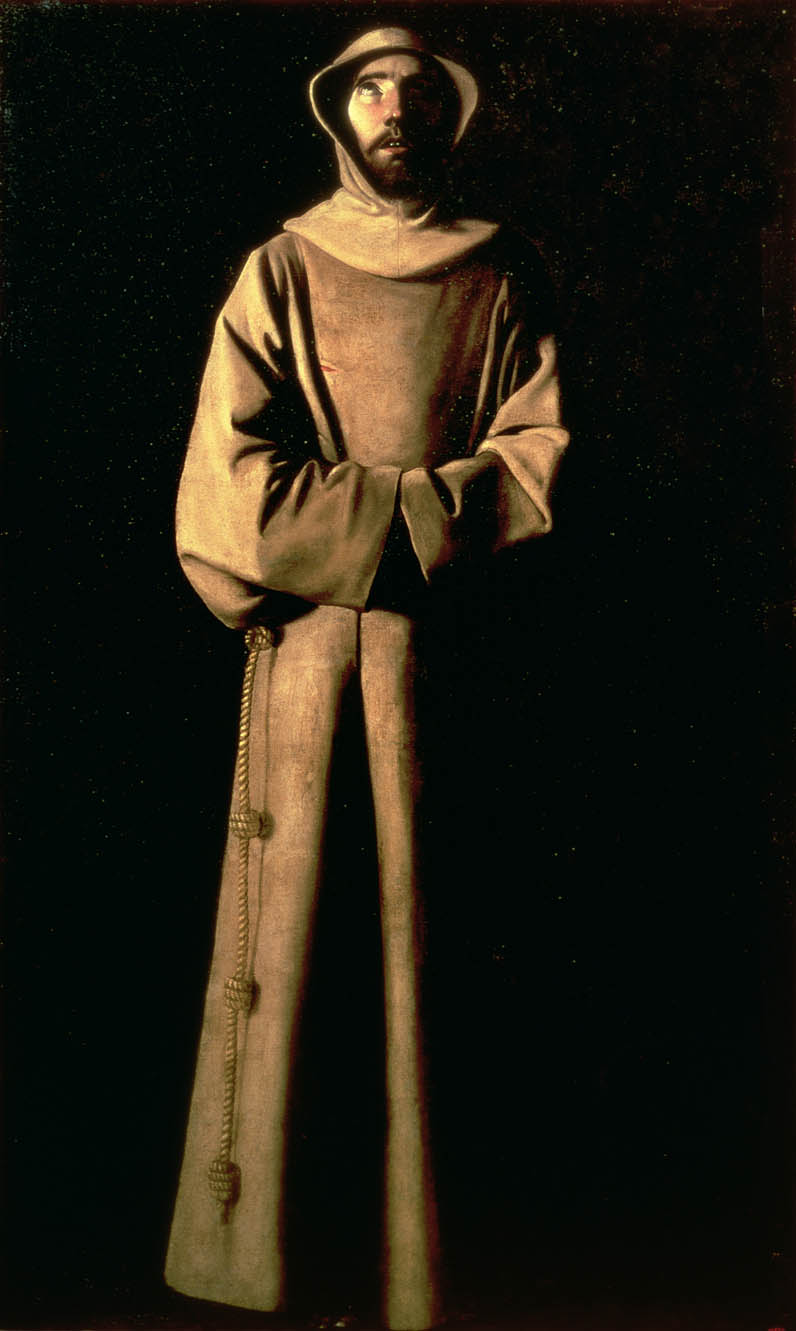
St. Francis as such, is as
much protest against a church unworthy of his ideals as much as he is a
paradigmatic example of the Church at its very best. In trying to understand
how the spirit of Francis might operate today, we are faced with this fundamental
ambivalence.
As such, I want to question what I perceive to be an implicit
assumption of this article: that since Francis was not 'a modern-day pacifist,
liberation theologian, feminist or environmentalist' but instead "a devout
thirteenth-century Italian Catholic.”, then equally, a devout, twenty-first
century global Catholic should not be these things either but instead should be
devoted to the teaching of the Church. That somehow the things listed above are
antithetical to authentic Catholic Christianity.
Perhaps I have misread, but if I am right, I would say that whilst
these things are clearly anachronistic for Francis, they are very much part of
our time, and all things mentioned carry ethical and spiritual considerations
that Church cannot simply hide away from by some otherworldly piety. Getting
stuck in with the world, going out to meet it where it is, is very much a
Franciscan activity. I have suggested that Francis represents both challenge
and assistance to the Church, caught somewhere between heaven and earth, but it
springs from an authentic, somewhat unnerving, gospel faith, that probably
would say 'we must obey God rather than men' (Acts 5.29). Do the pacifists,
feminists, liberation theologians and environmentalists who are striving within
the church they love to make it look at these issues more closely and
potentially call it out for perceived failings resemble any less the spirit of
Francis? I wonder (Those outside also provide a valuable critique I think, but
clearly don't fit the model of Francis). It hardly needs saying I'm sure, but
we're not in the 13th century any more, and the church cannot, should not
ossify around 13th century piety and problems.
I myself find it disturbing that violence could ever be considered superior to peacemaking by any true Christian, or that environmental protection, where the consequences of failing to take measures will hit the poorest people of the world first and hardest is against the will of God. I do not understand either, why the poor, who are called blessed, or women, equally redeemed by Christ should not be able to speak with their own voice (rather than appropriating the male, European, middle-class voice of the Vatican hierachy) and expect a humble church to at least listen to them. Unless of course the daughter of the Caananite woman (Mt 15.21-28) wasn't in fact healed.
Once again the Church is left to carefully discern what seems in line with the revealed faith as it understands it. Once again, it is faced with the choice of creating more Peter Waldos, or more St. Francises of Assisi. Thankfully, with a growing emphasis on Catholic Social Teaching as necessary instructions fro Catholics, with John Paul II happily speaking of 'the preferential option for the poor' and the new seven deadly sins including: 'Polluting the Environment, Causing Social Injustice, Causing Poverty, and Becoming Obscenely Wealthy' and with a rather more enlightened reaction to the death of Osama Bin Laden than in some other quarters of the globe, I see signs of hope and rapprochement. Women, admittedly, do not seem to be faring quite so well presently, but it is a question that has not yet gone away.
Perhaps nother Francis will arise that can bridge these gaps authentically and convincingly to more sceptical conservatives, and demonstrate how love of Christ and church can be combined with radical challenge and even complaint against its inevitable inadequacies in living out the New Testament ideal.


No comments:
Post a Comment