"The Voluntary nature of private confession is emphasized. Whereas the Church of Rome has appeared to teach that the Sacrament of Penance is necessary in the case of mortal sin, our Church has insisted that we are free to confess our sins to God alone without the hearing of a priest; and if we do this in sincerity God's forgiveness is sure. But our Church has no less insisted that we are free to confess in the sacramental way if we so desire and to ask absolution from the priest. The motives which have led people to this course have been powerful indeed. There is the feeling that thoroughness is called for in our confession, and the sacramental way certainly ensures this. There is the feeling that some painful and costly act on our part is not amiss in the confession of sins which wound the heart of our Lord. There is the feeling that the corporate nature of the Church makes appropriate an acknowledgement of our sins to "the family" of which the priest is representative. Finally, the word of absolution as a salutary decisiveness, blending Word and Act in a truly evangelical way."
Tuesday, January 22, 2013
Michael Ramsey on Confession
From his classic book 'The Christian Priest Today', I find it one of the most wonderfully elucidations of the practice of confessing to a priest in the Anglican Tradition, and one of the most convincing pieces for the practice, in its unflustered manner.

Sunday, January 20, 2013
Blogging as Spiritual Discipline
Today I delivered a sermon on the Wedding at Cana, and I didn't like what was written. Not that I am ever completely satisfied with my efforts of course, but this one really bothered me. All it all it was a collapsed souffle. It was lumpy, it was uneven; it crammed too much in and then dealt with its contents too lightly, and yet it was still too long. This sorry undercooked effort felt like it had all the charisma of a broken sledge.
Attempts were made at consolation; this is often the way with the second sermon I was told sagely before the first delivery. Yet I had had such a buoyant feeling about this one, I had actually sketched a plan out, I had made it link to the topic of last week and I had by happy coincidence (or perhaps there are no accidents...) been asked a question related to the topic and so had actually cracked open a number of books on the subject.
Still, there I was racking my brain into the small hours. I had actually gone to bed at three this morning thinking it was almost as lucid and erudite in execution as conception, so naturally when I read it back to myself at six, I concluded somebody had sabotaged the whole thing. Lucidity and erudition just didn't as detectable in this thicket of simple sentences.
So after some long thought I've decided to return to the practice of blogging. It struck me that the ideas might well have been there, but it just didn't 'ring true', I was not communicating particularly well. This would however be Blogging as a literary discipline if I stopped merely at writing for the sake of expressing a point, and whilst making offerings on the altar of improved writing is of some public good, this blog could potentially go deeper.
I think I once read somewhere in the writings of Evagrius of Pontus the observation that humans exist largely absent from themselves- that is, their bodies occupy one point in time, but their minds often seem to be wandering somewhere else- either mulling over some event of the past or peering ahead into the murky future, barely registering what is going on around it. This strikes me as being rather true, even now my thoughts are oscillating back to this morning and the pulpit and to tomorrow morning and an assembly that needs giving. This inability to notice my immediate surroundings I think has some consequences to it. Whilst I was fretting this morning, the curate said one relaxing technique was to try and look through one's peripheral vision, when we get nervous our vision tends to narrow and close in on the one point of anxiety. I must say it worked remarkably well and I can recommend it to anyone to do in a tight corner. But I also think an analogy can be drawn from the effort to blog. By committing to write something down on a regular basis, the practice demands that one finds something to write about. Which means I too need to start expanding my peripheral vision to my whole life, to notice those things of interest that might be worth sharing, and just seeing what there is to see rather than obsessively focusing on the few small, and probably ultimately rather insignificant tasks I have to hand, and in that I may well find things to be grateful for or to marvel at. It means I have to be more attendant to my feelings and reactions to things so it's not (hopefully) a boring recounting of events. If blogging helps me achieve these things to some extent, then I think it is of no small spiritual value.
I don't know if it will produce better sermons. Something written to be spoken requires a different structure to something written to be read of course, but even if it just means I have a collection of anecdotes, quotations and ideas, to drawn on, that's a better position than a headache and frenzied couple of hours typing on the wrong side of midnight. Even though, I am somewhat nervous that this is just going to publicise my mental decline since leaving university as I drift from the thoughts of greater minds to little domestic details, the sort that help Miss Marple unravel crimes. I'm not sure I want to be a Miss Marple figure.
Coincidentally, there was one bit I was proud of in my sermon. I sat down and did the maths on the 'Six stone water jars, each holding 20 or 30 gallons'. It would seem Jesus' response to the problem of running out of wine was a little excessive. It amounts to between 545.5 and 813.3 litres, or 727 bottles and one large glass of wine at the least to a little over 1091 bottles at the most. I just thought it was worth reminding the reader before I embark on this journey that there's often something redeemable in every pile of dross which may ooze from my keyboard.
Attempts were made at consolation; this is often the way with the second sermon I was told sagely before the first delivery. Yet I had had such a buoyant feeling about this one, I had actually sketched a plan out, I had made it link to the topic of last week and I had by happy coincidence (or perhaps there are no accidents...) been asked a question related to the topic and so had actually cracked open a number of books on the subject.
Still, there I was racking my brain into the small hours. I had actually gone to bed at three this morning thinking it was almost as lucid and erudite in execution as conception, so naturally when I read it back to myself at six, I concluded somebody had sabotaged the whole thing. Lucidity and erudition just didn't as detectable in this thicket of simple sentences.
So after some long thought I've decided to return to the practice of blogging. It struck me that the ideas might well have been there, but it just didn't 'ring true', I was not communicating particularly well. This would however be Blogging as a literary discipline if I stopped merely at writing for the sake of expressing a point, and whilst making offerings on the altar of improved writing is of some public good, this blog could potentially go deeper.
I think I once read somewhere in the writings of Evagrius of Pontus the observation that humans exist largely absent from themselves- that is, their bodies occupy one point in time, but their minds often seem to be wandering somewhere else- either mulling over some event of the past or peering ahead into the murky future, barely registering what is going on around it. This strikes me as being rather true, even now my thoughts are oscillating back to this morning and the pulpit and to tomorrow morning and an assembly that needs giving. This inability to notice my immediate surroundings I think has some consequences to it. Whilst I was fretting this morning, the curate said one relaxing technique was to try and look through one's peripheral vision, when we get nervous our vision tends to narrow and close in on the one point of anxiety. I must say it worked remarkably well and I can recommend it to anyone to do in a tight corner. But I also think an analogy can be drawn from the effort to blog. By committing to write something down on a regular basis, the practice demands that one finds something to write about. Which means I too need to start expanding my peripheral vision to my whole life, to notice those things of interest that might be worth sharing, and just seeing what there is to see rather than obsessively focusing on the few small, and probably ultimately rather insignificant tasks I have to hand, and in that I may well find things to be grateful for or to marvel at. It means I have to be more attendant to my feelings and reactions to things so it's not (hopefully) a boring recounting of events. If blogging helps me achieve these things to some extent, then I think it is of no small spiritual value.
I don't know if it will produce better sermons. Something written to be spoken requires a different structure to something written to be read of course, but even if it just means I have a collection of anecdotes, quotations and ideas, to drawn on, that's a better position than a headache and frenzied couple of hours typing on the wrong side of midnight. Even though, I am somewhat nervous that this is just going to publicise my mental decline since leaving university as I drift from the thoughts of greater minds to little domestic details, the sort that help Miss Marple unravel crimes. I'm not sure I want to be a Miss Marple figure.
Coincidentally, there was one bit I was proud of in my sermon. I sat down and did the maths on the 'Six stone water jars, each holding 20 or 30 gallons'. It would seem Jesus' response to the problem of running out of wine was a little excessive. It amounts to between 545.5 and 813.3 litres, or 727 bottles and one large glass of wine at the least to a little over 1091 bottles at the most. I just thought it was worth reminding the reader before I embark on this journey that there's often something redeemable in every pile of dross which may ooze from my keyboard.
Sunday, September 02, 2012
The First Steps...
I had never heard of Zbigniew Preisner until I became an ardent fan of the
Tree of Life soundtrack. I did in fact only watch it last weekend, so I’m a
little late to the party I know, and worse my feelings are entirely unoriginal
in thinking it a little OTT and maybe just a touch too slow, but I really liked
the music. So I put this up for little other reason than I like this man’s
music and I’ve been listening more widely.
So I’ve been at the job a few days now. Term doesn’t begin until tomorrow but I’ve had my first Sunday in the parish church, I have been overcome with a great awful tide of humans all thrusting their hands into mine, a welter of names, jobs, occasional life-stories. It’s incredible, and I’m so bored, so very bored of telling people who I am, what I do where I’ve come from, why I’m here.
So I’ve been at the job a few days now. Term doesn’t begin until tomorrow but I’ve had my first Sunday in the parish church, I have been overcome with a great awful tide of humans all thrusting their hands into mine, a welter of names, jobs, occasional life-stories. It’s incredible, and I’m so bored, so very bored of telling people who I am, what I do where I’ve come from, why I’m here.
Not
least because I don’t really have a clue. Well, most of it is fairly obvious at
the level of smalltalk, but no I still have very little idea wha tI’m going to
be doing this year. I’m tired of saying it, and I’m tired of the looks that
range from puzzlement to suspicion from the staff who wonder what I’m being
paid for. It’s nobody’s fault of course; my bosses have been away, I can’t get
my email to work and it’s the weekend, what can any one man do when faced with
such enemies?
But
I must break the mould, I don’t remember anyone who I only know generic surface
details about, I shall forthwith construct questions that will get a look at
people’s souls, or else entertain me when I meet the students tomorrow. Perhaps
rhetorical questions culled from the bible would be appropriate? ‘So do you
think a leopard can change its spots?’, ‘Would you rather gain the whole world
or keep your soul?’, ‘What is truth?’ ‘Would you spare Sodom for the sake of
just ten righteous men?’, ‘Shall we go on sinning that grace may increase?’ It
will be glorious. And yet, I need something, adults love telling people their
name, I want to make an effort with the students. And it works. Although the
gospel according to Simon Amstell has not quite made it into the next edition
of the bible, I did try ‘Have you ever licked a battery?’ over coffee this
morning and lo, I now remember the woman who has licked a battery. But not her
name, but that was only, only because
I didn’t hear it.
Upon joining the church community for Sunday worship I’m quickly remembering the challenge of living with community. One body of Christ, but as many minds as their are members, and all of them keen to share what they think the big priorities and concerns are. Community relations with the school? The deficit in the annual budget? The lack of a role for the MC? Maybe finding solutions for all of these to the satisfaction of all could be a task to stretch the minds of the next wave of new people I meet.
Still, whilst I in absolutely no way envisage my role as encompassing the grandeur of Preisner’s ‘Song for the unification of Europe’ above, it is a reminder at what is the source and the end of it, and that being that person who shows and lives the life of love, of the God who is love, in his called out community, is first and foremost my job. Not sure if that answer will go down any better with my educational colleagues mind, but it’s probably more challenging and encompassing than even the fullest of diaries and planners.
Ok, perhaps maybe a bit of the pretension has evidently rubbed off with that last sentence.
Nevertheless, I guess I shall wait, and watch and listen like an oiled-up virgin (...) and maybe I will see what need appears, what can be done. And see if can be done with feeling, maybe even with love.
Upon joining the church community for Sunday worship I’m quickly remembering the challenge of living with community. One body of Christ, but as many minds as their are members, and all of them keen to share what they think the big priorities and concerns are. Community relations with the school? The deficit in the annual budget? The lack of a role for the MC? Maybe finding solutions for all of these to the satisfaction of all could be a task to stretch the minds of the next wave of new people I meet.
Still, whilst I in absolutely no way envisage my role as encompassing the grandeur of Preisner’s ‘Song for the unification of Europe’ above, it is a reminder at what is the source and the end of it, and that being that person who shows and lives the life of love, of the God who is love, in his called out community, is first and foremost my job. Not sure if that answer will go down any better with my educational colleagues mind, but it’s probably more challenging and encompassing than even the fullest of diaries and planners.
Ok, perhaps maybe a bit of the pretension has evidently rubbed off with that last sentence.
Nevertheless, I guess I shall wait, and watch and listen like an oiled-up virgin (...) and maybe I will see what need appears, what can be done. And see if can be done with feeling, maybe even with love.
Wednesday, August 29, 2012
The Other Reason for Writing...
I was quite surprised to return from Greenbelt to find that some good folk had actually taken a glance at what I had written last week. Most encouraging, particularly the people from Russia. How you ended up here remains a mystery but I liked it all the same.
Still, I'm not here to brag about the quantity of internet traffic that's been coming my way (18 views all month...) but to announce I've started a new job. Today was my first day, an induction day for new staff which got progressively more morbid, slowly descending from Health and Safety into the horror stories of child abuse.
For you see, I work in a school, and I work as part of the chaplaincy team. That is to say, there is the Chaplain, and there is me. I shan't say where, but I will say it's big- I've never seen so many teaching staff attached to a single institution, and despite my best intentions in shaving off my beard, I still had the biggest hair of any of the male staff. And I still had itchy patches round my neck and jaw. And the shaving had revealed I still had spots underneath. And I have a cold sore.
I felt a little out of place.
But nevertheless I have been hired, and all things being equal I will be paid, I will have a house for a year for yes, yes it is in a private school.
And I do wonder if I've sold out for the sake of 11 cheques already.
I should say I'm not just a school chaplain, though 4 days of the week I am, I also will be working in the Parish Church. That's for two days. The Saturday is my own. But nevertheless, it's not the Church that's paying me.
So why have I done this? Hard to say really, the job practically dropped out of the sky and into my email box, I thought 'why not?' and before long I was in an interview and then offered a job. By instinct quite lazy, I felt it easier than making any more applications.
But it's more than that. It's closer to where most of my friends live than Swindon, it offers experience of church and chapel life, the possibility of teaching experience, it gives me a year out from studies, it's new and exciting and the co-curricular stuff gives me a chance to pick up all that I neglected at Oxford.
 But it's more than that. It's a scheme for those who are testing vocation, trying to taste and see if the Lord is good. Good enough to follow in a priestly ministry. Am I thinking about that? I don't know...Oxford skews one's understanding of what being a priest is like. I can't help but wonder if it's a passing phase brought on by a heady mix of choral music and theological study for three years. Much as I love both of those things.
But it's more than that. Because it's a chance to move from 'contemplation' to 'action', it's a chance to test in the real world all that I've wondered about over the last few years. And that's the other reason for writing this blog more regularly. To see if I really have found some things useful.
For I am an Anglo-Catholic in the radical tradition. What does this mean for me? I shall save that for another post, but suffice to say it mixes a rather old fashioned piety with a deep respect for the riches of our Christian heritage along with an insistence upon the social dimensions and impact of the gospel message today.
I am only a young man, and when I read a lot of stuff concerning youth work or look at the churches that seem to have young congregations, they tend to be of a quite conservative, often evangelical or even charismatic persuasion. Indeed, this was my background growing up. I remain a critical friend (or so I would like to think) but I felt the need to move on, and found in this very different style of churchmanship in many external respects something deeper, more engaging, more fulfilling, more in touch with its history and with the idea of a community as well as a much more obvious appreciation for learning and study.
To take the label of 'catholic' for one's own though is of course hardly to be buying into a homogeneous thing, even with the term 'anglo-catholic', so I don't want anyone to jump to conclusions about what wisdom I'd hope to share with my young audiences...but this perhaps is the biggest reason why I wanted to try this this year: I want to know if others, especially the young, can find Christ in the wealth of our traditions as the enduring body of Christ over the last two millennia. As I did, and continue to do. Can an authentically catholic expression of the faith be something that engages the young?
Of course, I have my prejudices and values...I'd like to say they are derived from the gospel, but others may sharply disagree. Exactly which bits I wish to bring into the light a little more will be for the next post, and I think Greenbelt may well feature heavily into that mix.
Still, if this post has bored you, I will leave you with this guy who I did see perform at the festival. And I thought he was brilliant.
Thursday, August 23, 2012
Prelude in the key of Atheism
Everything changes. I have been a very slapdash writer. I've had exams, I've been travelling, but even I can see that if I'm ever going to consider writing as a job option, then I'm going to have to get into the habit and practice of actually writing something. So, everything changes. However not quite yet, because I'm off to the Greenbelt Festival in Cheltenham over the weekend.

I'm very excited of course to be returning once again to British Christianity's premier 'evangelical post-evangelical', bourgeois hippie, come one come all, green, arts, politics and faith festival. It is a genuine joy and I've never met anyone coming away from it for the first time without saying 'I've never seen a place like it anywhere else'. It's still true I think. At least, I've never seen any other place in the world where people neatly line up their litter next to an overflowing bin.
Anyway, since I'm in a tent and don't possess a smartphone or anything of some such quality, I'm just going to exist off the radar for a while, but I thought I would have a warm up this...morning now (whoops), and the topic, for no particular reason other than I've been thinking about it today is atheism.
The catalyst is the Extremely interesting news concerning the emergence of 'Atheism+' an attempt to see the principles or values of scepticism applied to a wide gamut of societal issues and contexts. However, it also seems to be quite a bit about (presently at least) trying to put the Atheist movement's own house in order, endeavouring to make sure its voice is not merely that of a white middle class male.
This I take to be a welcome development. When someone like Dawkins talks of obliterating superstition and having humans being guided by 'reason' he seems to talk as if this is a universal imperative upon humans. But, from his cosy North Oxford home, he hardly can claim anything like a universal perspective; what value does this western, quite cerebral (though not lacking in emotive gestures or even underpinnings), individualistic creed offer to the marginalised of the earth? How far does being guided by reason help one in their moral existence when they're starving to death?
The other thing about the kind of atheism that I have (personally) encountered with people that follow in Dawkin's trail is that it is a rather emaciated creed: partly because it lets religion set the debate as to what qualifies as an important question, and then usually responds with a denial of whatever the religion asserts. But a denial is not a positive, alternative vision for humanity, it lends no worth nor dignity nor purpose to human activity, it gives us no understanding of who we are or where we're going.
Darwinism is sometimes held up as the opposing theory to Religion (questionable as it is to firstly oppose the two, and secondly to treat religion as if it is, first and foremost, a method of explaining natural phenomena), but it doesn't follow that nature's way should necessarily mean we should incorporate it into our man-made social systems. Must we create Spencer's Dystopia?
In fact, most of the time, these atheists I've encountered seem to uncritically, instinctively champion our individualist, capitalist, liberal norms with a startlingly whiggish enthusiasm. Although I know some atheists who do critique our model of society, I've never seen it being derived from, or integrated with their atheist opinions- the two seem to drift, seemingly unconnected in the intellectual ether. But is this failure of introspection on other beliefs they have about the good life apart from which Gods one worships partly because they are being guided by those who have a hegemonic status in society?
So Athism+ promises to throw up some interesting results, should it be able to break through the stale, male and pale ethos that apparently pervades the movement. Will the widening of perspectives and the engagement with issues from an atheist perspective see a growing repudiation of the status quo of society, tackling more things than simply religion in the public square? Will it begin to construct a new idea of what makes a person that doesn't treat particular abstract ideals (i.e. the existence or non-existence of God(s)) as absolutely crucial in determining the fulfilled human existence? Will it give a stronger moral vision than simply 'try to be a good individual in your personal life'?
God knows the world has major problems that need sorting out that require serious human engagement and long term planning, which cannot be derived merely from mechanistic principles but touches upon the questions of what does it mean to be human, to be fulfilled and how should we live together to achieve this. The question is, will Atheism+ be able to find those answers?
God knows the world has major problems that need sorting out that require serious human engagement and long term planning, which cannot be derived merely from mechanistic principles but touches upon the questions of what does it mean to be human, to be fulfilled and how should we live together to achieve this. The question is, will Atheism+ be able to find those answers?
Wednesday, May 23, 2012
St. Francis: Obedience and Radicalism rather than Radical Obedience?
Today I've read a blog post concerning the release of a new history book on
Francis of Assisi, which paints a more realistic, nuanced portrait than
hagiographers (past and present!) have given.
It should come as no surprise, I think, to anyone who has done
even a little historical reading on the life of St. Frances and his order, that
he was very much an embodiment of the piety of his day, which included a zeal
for his Church.
But I feel this article is doing its own bit 'domestication' by
leaving off the context of his activity in pursuing the 'apostolic life'.
The thirteenth century, like the two centuries before it was a
time of high complaint against the Catholic Church, a failed attempt at
'purifying' the institution, combined with increasing urbanisation and lay
literacy meant that a lot of ordinary people were finding ways of articulating
their opinion that the church had become morally lax, far too concerned with
secular politics and overly wealthy. When the church failed to clean up its
act, many enthusiastic individuals simply decided to go their own way.
Francis was lucky in that he was welcomed by the Church, but in
his ideals and practice, there seems little to distinguish him from a lot of
the 'heresiarchs' of the prior century, particularly I think of the Waldensians
and the Humiliati, particularly in the early days, before their excommunication
due to their enthusiasm for vernacular preaching, the Bible and poverty. It
would seem in their cases their popularity made them few friends with the
secular clergy, and the Church created its heretics in the 12th century by
proscribing genuine religious passion, failing to cope with the idea that the
laity could be more than merely passive recipients in the great medieval
religious world.
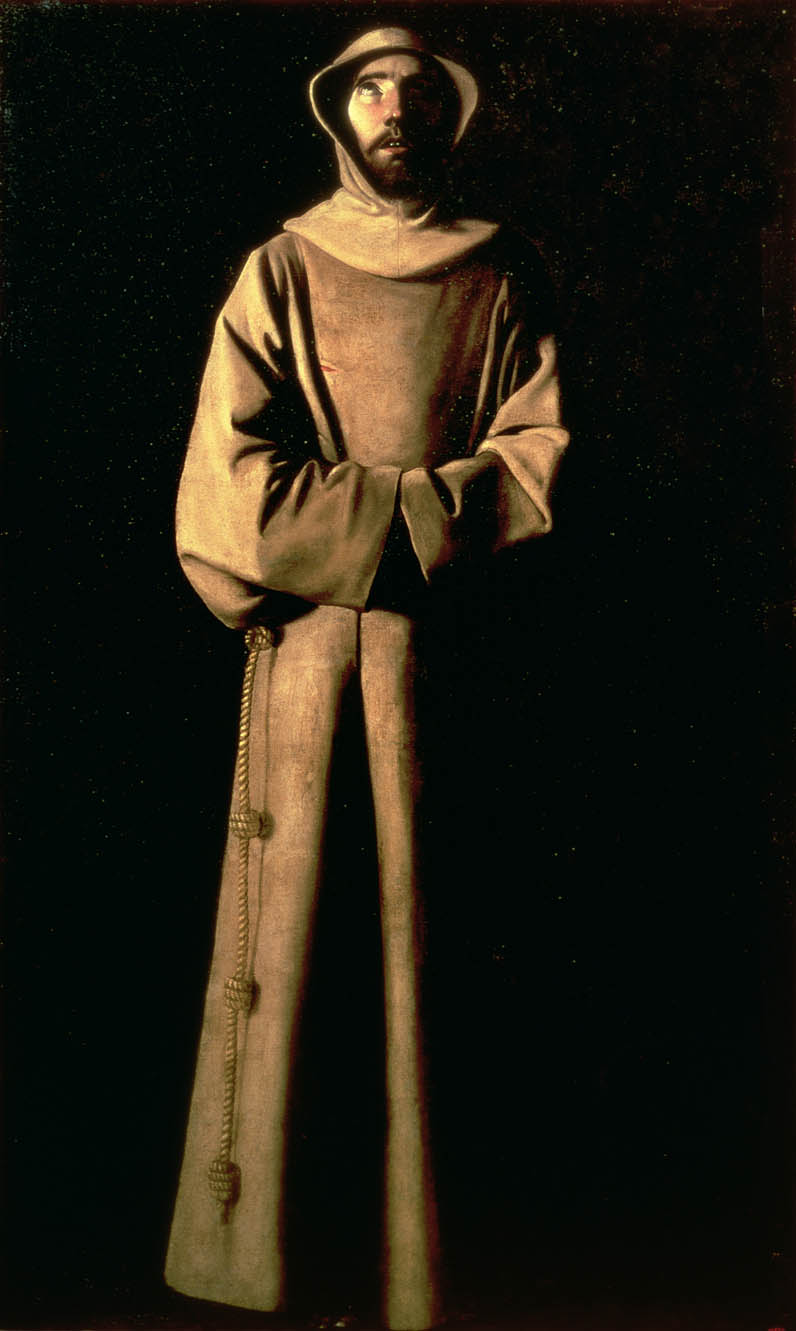
St. Francis as such, is as
much protest against a church unworthy of his ideals as much as he is a
paradigmatic example of the Church at its very best. In trying to understand
how the spirit of Francis might operate today, we are faced with this fundamental
ambivalence.

As such, I want to question what I perceive to be an implicit
assumption of this article: that since Francis was not 'a modern-day pacifist,
liberation theologian, feminist or environmentalist' but instead "a devout
thirteenth-century Italian Catholic.”, then equally, a devout, twenty-first
century global Catholic should not be these things either but instead should be
devoted to the teaching of the Church. That somehow the things listed above are
antithetical to authentic Catholic Christianity.
Perhaps I have misread, but if I am right, I would say that whilst
these things are clearly anachronistic for Francis, they are very much part of
our time, and all things mentioned carry ethical and spiritual considerations
that Church cannot simply hide away from by some otherworldly piety. Getting
stuck in with the world, going out to meet it where it is, is very much a
Franciscan activity. I have suggested that Francis represents both challenge
and assistance to the Church, caught somewhere between heaven and earth, but it
springs from an authentic, somewhat unnerving, gospel faith, that probably
would say 'we must obey God rather than men' (Acts 5.29). Do the pacifists,
feminists, liberation theologians and environmentalists who are striving within
the church they love to make it look at these issues more closely and
potentially call it out for perceived failings resemble any less the spirit of
Francis? I wonder (Those outside also provide a valuable critique I think, but
clearly don't fit the model of Francis). It hardly needs saying I'm sure, but
we're not in the 13th century any more, and the church cannot, should not
ossify around 13th century piety and problems.
I myself find it disturbing that violence could ever be considered superior to peacemaking by any true Christian, or that environmental protection, where the consequences of failing to take measures will hit the poorest people of the world first and hardest is against the will of God. I do not understand either, why the poor, who are called blessed, or women, equally redeemed by Christ should not be able to speak with their own voice (rather than appropriating the male, European, middle-class voice of the Vatican hierachy) and expect a humble church to at least listen to them. Unless of course the daughter of the Caananite woman (Mt 15.21-28) wasn't in fact healed.
Once again the Church is left to carefully discern what seems in line with the revealed faith as it understands it. Once again, it is faced with the choice of creating more Peter Waldos, or more St. Francises of Assisi. Thankfully, with a growing emphasis on Catholic Social Teaching as necessary instructions fro Catholics, with John Paul II happily speaking of 'the preferential option for the poor' and the new seven deadly sins including: 'Polluting the Environment, Causing Social Injustice, Causing Poverty, and Becoming Obscenely Wealthy' and with a rather more enlightened reaction to the death of Osama Bin Laden than in some other quarters of the globe, I see signs of hope and rapprochement. Women, admittedly, do not seem to be faring quite so well presently, but it is a question that has not yet gone away.
Perhaps nother Francis will arise that can bridge these gaps authentically and convincingly to more sceptical conservatives, and demonstrate how love of Christ and church can be combined with radical challenge and even complaint against its inevitable inadequacies in living out the New Testament ideal.
Friday, March 02, 2012
My First Homily (of sorts)
A Talk given to sixth-formers on the theme of 'Exploration' delivered 29/02/12 as part of my interview for the lay chaplaincy job at Berkhamsted School.
____________________________________________________________________
What was the last thing you learnt whilst travelling in a new place?
Reaching the cusp of February, it may be a little premature to say it, but nonetheless, I I really think that this (here a slide appears), is going to be the biggest event of 2012. Olympics pah, Meteorite pah, Mayan calendar, pah. Women Bishops....a very close a second maybe.
No, for me the big event of 2012 is the release of the first part of Peter Jackson’s The Hobbit: An Unexpected Journey.
I love the work of Tolkien; I re-read the books, re-watch the movies...you might say it’s an extremely bad hobbit of mine (sorry), can’t speak elvish though so I guess I’m not a ‘real’ fan.
You see, I don’t love Tolkien’s world for the sake of it; What I really love are the stories; of adventures into a new land, of companions travelling together into unknown territory.
Doubtlessly Tolkien is my favourite author, and The Hobbit is still my favourite of all his works, for at its core, it’s about a fairly ordinary sort of chap who is dragged out of his comfort zone in order to confront and discover a world he has heard a bit about, but never thought to go and explore for himself. And what an incredible world it turns out to be.
Now I’m sure we’ve all dreamed and day-dreamed about going off somewhere new and exciting, getting away from it all, doing interesting things with our lives, having adventures. Though this isn’t all; Bilbo himself doesn’t simply discover a new world for himself, he also discovers new things about himself; a taste for adventuring, an ability to fight, a streak of dishonesty, a surprising amount of courage.
In many ways the Tolkien adventures offer a richly graphic representation of the journey of the Christian life. Journeying is frequently portrayed in the bible as a good time for discovery of God and discovery of self, whether its the wandering nation of Israel gaining definition through the law given at mount Sinai, or Jacob receiving the name Israel after wrestling with God or an angel, or the two people on the road to Emmaus recognizing their Lord in the breaking of bread.
Yet, a note of caution should be sounded here, for I don’t wish to imply that by not getting out there we are somehow trapped in a boring and meaningless existence here (even as often as it can feel like it).
Bilbo, its true, had to journey through the outer world, in order to discover something about his inner being, yet for us we are often first required to travel further and further within ourselves, to explore our hopes, fears, desires- our very souls, the deepest regions of our being, and we can take what we learn in that place out into the wider world with us.
Middle-Earth is a bit like our inner self, our heart; here, like Bilbo, we may encounter good and evil, and discover things about good and bad aspects of ourselves in a rich interior landscape shaped by our experiences and thoughts and feelings. As a fourth century homily attributed to a monk known as St. Macarius of Egypt puts it:
The heart itself is but a small vessel, yet dragons are there, and there are also lions; there are poisonous beasts and all the treasures of evil. There also are rough and uneven roads; there are precipices. But there too is God, the angels, the life and the Kingdom, the light and the apostles, the heavenly cities and the treasures of grace- all things are there... - Pseudo-Macarius
Is it not the case that we often assume that everything exciting and fulfilling is happening ‘out there’ miles away from where we are standing in the present? Often in religions humans fall into the same error; God is somehow ‘out there’ peering in at our lives, and the only way to find him is by leaving our ‘real’ selves (as we conceive them) behind, purging ourselves, and performing certain rituals which are separate from the rest of our lives.
Yet this is not the case with the God who took on flesh, and experienced in his body all that humans do, and by doing so restored the image of God, our ‘real’ self, within humans.
We cannot find God or transcendental meaning, by leaving the world or our selves. As Jesus once said, The Kingdom of God is within you. And just as God in Jesus took part in our humanity and so took it upon his divinity, so might all our human activities and experiences show the divine within us, at work, even within our darkest hours, and when we feel least in control of our feelings.
Of course, just because we know of God’s involvement, doesn’t mean there’s no point in exploring our hearts and meeting him, any more than Google maps has taken the point out of travelling to new places and seeing them first-hand.
It happens over time of course; one does not simply know oneself any more than one simply walks into Mordor, and who knows what life changing experience is just around the corner that will totally redefine our self-perception?
As sixth-formers, I suppose you are all about to embark on your own adventures in the world, your increasing independence will soon see you travelling to and living in new places, meeting new people, trying out new things, a voyage of discovery all of your own.
And there’ll be both trials and triumphs, fortune and failure. And what I want to say is that none of it is worthless, even the most seemingly foolish or even mundane activities, like discovering a simple ring in a cave perhaps(?) make up an authentic part of who you are.
And by spending time exploring the world of our heart, and being mindful of how we really feel about things around us, in the tradition of the great Christian mystics, like Macarius, we may yet find God, and a purpose, active within our lives, not imposed from without, be it by friends, family, the media or whatever. The world can be met with the true person, and not a false projection.
For in it all, God is there, grounding us. No matter how dark the journey, or how lonely the path, or uncertain our direction. Even if we turn away or flee from our monsters. Having walked that walk, having grown as a human himself, God is there, travelling with us, working within us, even if our lives take us on the most unexpected journeys.
Sunday, February 05, 2012
St. Macrina and the Bride
 In constructing a response I have decided to marshal the assistance 4th Century Cappadocian Father Gregory of Nyssa. Although the early Church may seem unpromising territory at first to speak out in support of women, Gregory has, I think, some inspiring things to say and certainly is popular with some feminist theologians. Although there is an awful lot that could be said on this topic, and much that is shared with the other two Cappadocian Fathers, for the sake of brevity I shall, after a few introductory remarks, concentrate on two of his works: The Life of St. Macrina and Homilies on the Song of Songs.
Like most ascetic/mystical writers following from Origen, Gregory affirms that most of the things that humans identify themselves by: social status, wealth, family and even one’s physical sex are in fact secondary and ultimately irrelevant to what makes a human a person. What really matters, Gregory affirms time and again, is one’s relationship with God, whether they desire what is truly good and beautiful and pursue a virtuous life or whether their personality is being squandered on earthly desires. Gregory actually reads the Genesis 1 account: ‘So God created humankind in his image...male and female he created them’ as implying that sexuality only appeared in a second-stage of creation, a merciful addition by God so that humanity could continue to exist after they lost sight of God in the fall. Ultimately, humans transcend gender binaries for (as Gregory often repeats) ‘there is neither male nor female in Christ’.
So far this is not sounding overly affirming of women I’ll admit, yet since Gregory sees gender as non-essential, not only does he see the full spiritual equality of women, but he also speaks of spiritual progress in distinctly gendered terms that appear to represent stages of spiritual progress; at times a human is expected to play the man and the woman in relation to God.
St. Macrina- ‘One who went beyond the nature of a woman’
In many ways Gregory repeats the sort of gendered stereotypes of John Piper, the passionate woman and the stern, disciplined man and he may even agree with his 8 traits of ‘masculine’ leadership (scroll down a bit). The only difference is that Gregory found most of them in his older sister, St. Macrina.

Granddaughter of the celebrated Martyr Macrina the Elder, Macrina after the premature death of her fiancée opts to lead a life entirely devoted to God, and so she begins to turn her household into an ascetic community which she leads. Gregory notes her as ‘father, teacher, attendant, mother, the counsellor of every good...’ when she takes up the care of their youngest brother Peter, and he calls her ‘my teacher in all things’. It is Macrina who punctures St. Basil the Great’s ego after returning from university and persuades him to abandon secular glory and commit himself to God instead. It is Macrina who does manual work around the house and shows deep ascetic commitment by sleeping on boards and possessing only one set of clothes. She performs miraculous healings and when either Gregory or her mother succumbs to grief over the death of Basil or another son, Naucratius, respectively (it was a big family) it is Macrina who counsels them, rebuking their softness. It is Macrina who is presented as instructing Gregory on the topics covered in The Soul and the Resurrection.
In the Life of Macrina there has been a complete inverting of the gender stereotypes, she represents Piper’s resolute ‘masculinity’ whilst the men (and particularly Gregory himself) seem to yield to ‘womanly’ passion. This may seem a danger sign though are women expected to just ‘become men’? Is Gregory’s androgyny just masculinity in disguise? I would argue not so. The narrative of the Life finds an abrupt cut-off at her funeral, where Gregory and the Virgins have succumbed to passionate grief over the loss of their sister, teacher and leader. A picture of (masculine) ‘reason’ being overtaken by ‘passion’. This can only be right: as stated, for Gregory one’s personality depends not on their austerity but their desire for God, and he expresses this desire as ‘eros’ for God. Gregory is known as an apophatic writer, a ‘Theologian of Darkness’, eventually if one is to truly unite their soul with God, they have to leave behind not just sin and vice, but word, concepts, discursive thought, and enter a ‘darkness’ of the mind where one is guided by their own ‘eros’ for God, and ‘feel’ his presence with inner ‘spiritual senses’. This is best exemplified by the Bride in his Homilies on the Song of Songs.
The Bride- ‘I am wounded with love’
For Gregory the Spiritual life is a series of (infinite) progressive stages, and what’s more there are certain gendered ways of describing them, and this is very clear in his homilies on the Song. In Homily I Gregory explains the pedagogical functions of the three Wisdom books, Proverbs, Ecclesiastes, Song of songs, and notes that in our early stages of spiritual growth, our souls play the ‘male’, courting Wisdom and enjoying her gifts (Wisdom, Sophia, is of course Christ for Gregory) but at the more advanced stages the soul transforms into the Bride, expectantly waiting to receive further revelation from the Bridegroom in the house of the his mother (who Gregory interprets as the Father). Having searched for her beloved outdoors and realizing that no one can tell her where he is because he is incomprehensible to the mind, she returns to the dark bridal chamber and awaits him, resplendent in her virtues, which are like rich perfume and gold and silver. There are a huge number of images that swirl around Gregory’s homilies that could be mentioned, but one of the most striking is the arrow of love in Homily IV.
In a startling piece of Trinitarian imagery, the Father, who is the archer, fires an arrow, who is the Son, into the Bride’s heart, after it has been dipped into the Spirit. She cries out in ecstasy and boasts of her wound, she has been pierced by God. Then, most remarkably of all she herself is transformed into the arrow in the hands of the Son, the bridegroom. Yet Gregory chooses to express this in imagery that is less martial than marital;

the arrow tip the bride’s head held in the left hand of her beloved, the arrow shaft her body, held in the right. It is the feminized soul, the passionate, desiring soul that has found union with God. And this for Gregory is to be the experience of both men and women on their spiritual journey, for in Christ there is neither male nor female.
There is much more that could be said on this topic, and particularly the idea of purity of heart making the soul as a mother giving birth to spiritual thoughts, and I probably haven’t done enough justice to the two works covered here. However I hope I have written enough to suggest to Mr. Piper that perhaps if he wants a ‘masculine’ church, one that desires God as the conference name he spoke at implies, then his best bet, at least according to Gregory, is for it to play the woman all the more.
Friday, February 03, 2012
Birthday Greetings from a Theology Student
Now you may Rahner Knox have
Theology Puns on your Birthday,
Barth,
I couldn't let it pass on the (Dorothy) Day
of your Origen,
so I'll Cranmer a-(st.) Paul-ling jokes in
Tillich is clear that I'm a total Luther.
Subscribe to:
Posts (Atom)